10 Key Considerations in Satellite Design: From Mission Planning to Sustainability
Designing a satellite is a very complex process that requires careful integration of engineering, operational, and financial factors. Each satellite is built for a specific mission, whether it's capturing high-resolution images of Earth, enabling global communication, monitoring weather patterns, or exploring deep space. These different goals guide every part of the design process.
One of the first and most important steps is defining the mission requirements, which influence decisions about payload type, orbit choice, and system setup. The payload—the satellite’s main functional part—must be supported by strong subsystems, including power supply, thermal control, attitude determination, and propulsion.
Structural strength is vital to survive the launch, while environmental resilience ensures the satellite can withstand the tough conditions of space, such as radiation, vacuum, and temperature extremes. Engineers also need to consider size, weight, power limits, and cost throughout the design.
This complex balancing act between performance, reliability, and budget requires a team approach, drawing expertise from aerospace engineering, materials science, and systems design. As satellite missions grow more ambitious and varied, these design considerations are more critical than ever for creating successful, long-lasting space assets.
1. Defining the Mission Objectives
The foundation of any satellite design lies in clearly defining its mission objectives. These objectives influence every aspect of the satellite, from its physical dimensions and internal systems to payload configuration and orbital mechanics. Without a well-defined mission, the design process risks inefficiency, technical mismatches, or mission failure.
Mission applications are diverse: A satellite may be designed for telecommunications, Earth observation, meteorology, scientific research, or global navigation. Each application comes with distinct technical demands. For example, a remote sensing satellite requires high-resolution imaging sensors and precise attitude control, while a navigation satellite must deliver accurate timing and positioning data across vast areas.
Mission duration: Satellites can be designed for short-term experimental use, lasting only a few months, or for long-term operations spanning over 15 years. The expected lifespan influences the choice of materials, redundancy measures, radiation shielding, and onboard system reliability.
Orbit selection: A low Earth orbit (LEO) may be suitable for high-resolution imagery or quick revisit times. Conversely, a geostationary orbit (GEO) provides continuous coverage over a fixed area, making it ideal for communications or weather monitoring. Sun-synchronous orbits, commonly used for Earth observation, ensure consistent lighting for imaging.
For instance, an Earth observation satellite typically pairs an optical or radar payload with a sun-synchronous orbit to capture consistent data. In contrast, a communications satellite in GEO maintains stable coverage for ground-based users. Ultimately, a well-defined mission sets the direction for every engineering decision.

2. Payload Design and Selection
The payload is the core of a satellite. It is the main functional component designed to achieve the mission's primary objectives. Whether it’s capturing images, relaying communications, collecting scientific data, or supporting navigation, the payload shapes much of the satellite’s architecture and subsystem design.
Payload design starts with choosing the right instruments to meet the mission goals. This could include optical or radar sensors for Earth observation, communication transponders, atmospheric sensors, or space-based telescopes. Once chosen, engineers must consider how the payload integrates into the satellite system as a whole.
Weight and volume: Larger or heavier payloads require stronger structural supports and influence launch vehicle selection and costs. Compact, lightweight designs are often preferred, especially for small satellites or constellations.
Power consumption: Payloads such as high-resolution cameras or high-power transmitters may need substantial energy. The satellite must, therefore, be fitted with efficient solar arrays, batteries, and power management systems capable of supporting peak demands without compromising overall performance.
Thermal management: where payloads face extreme temperature fluctuations. Heat generated by onboard instruments must be dissipated effectively using radiators, heat pipes, or phase-change materials to prevent damage or reduced performance.
Data handling: High-data-rate payloads require robust onboard processors, memory, and downlink systems to process, store, and transmit data back to Earth reliably. This is especially important for remote sensing or scientific missions that produce large amounts of data.
In essence, the payload defines the satellite’s purpose, and its specific requirements influence every other system, from structure and power to communications and thermal control.
3. Structural Design and Materials
A satellite’s structural design ensures it withstands intense launch forces and the harsh space environment. It must be lightweight enough to meet mass restrictions and sturdy enough to protect internal systems throughout its mission.
Minimising mass is vital because launch costs are directly related to weight. However, reducing weight should not compromise durability. During launch, the satellite must endure intense vibrations, acoustic loads, and mechanical shocks. Engineers often turn to advanced composite materials, such as carbon fibre-reinforced polymers, which offer high strength-to-weight ratios to achieve this balance.
Once in orbit, satellites encounter a unique and challenging environment. The vacuum of space can cause materials to outgas, while radiation can degrade structural components over time. Additionally, the satellite must withstand extreme temperature swings, from intense heat in sunlight to deep cold in shadow. Materials must be carefully chosen for thermal stability, radiation resistance, and mechanical resilience.
The structural layout of the satellite is just as important. Engineers must design the configuration to support payload integration, accommodate power systems and antennas, and maintain overall balance. This includes considerations for deployable elements, such as solar arrays or antenna booms, which must function reliably without compromising structural integrity.
Ultimately, the structure acts as the satellite’s physical backbone, ensuring mechanical stability, safeguarding sensitive systems, and supporting successful deployment and operation in space.

4. Power Systems
Power systems are crucial for satellite operation, supplying the energy needed for payloads, communication links, control systems, and onboard electronics. Without a reliable power source and effective energy management, even the most advanced satellite cannot complete its mission.
Most satellites harvest solar energy using photovoltaic arrays. These solar panels convert sunlight into electricity and are typically deployed once the satellite reaches orbit. The size, shape, and orientation of the panels are carefully designed based on the satellite’s overall power needs and the orbital environment. For example, satellites in geostationary orbit may require larger panels to support continuous operation, while low Earth orbit satellites experience more frequent eclipses, requiring more robust storage solutions.
Energy is stored in onboard batteries to maintain operations when the satellite is in Earth's shadow or during launch and deployment. These rechargeable batteries must be lightweight, durable, and capable of handling numerous charge-discharge cycles throughout the satellite's lifespan. Lithium-ion batteries are often chosen due to their high energy density and reliability.
Energy efficiency is equally important. Satellites utilise power management and distribution systems to monitor consumption and allocate energy wisely. These systems prioritise essential functions, such as attitude control and communication, while managing less critical components to save power when needed.
Designing an effective power system involves balancing generation, storage, and consumption. Every watt must be optimised to ensure long-term performance and mission success in the energy-scarce space environment.
5. Communication Systems
Effective communication systems are vital for any satellite mission, enabling constant data exchange between the satellite and ground stations. These systems support essential functions such as command and control, health monitoring, and the transmission of scientific or observational data back to Earth.
One of the first factors to consider when designing a satellite’s communication system is the choice of frequency bands. Common options include UHF, S-band, X-band, and Ka-band, each with its own advantages and disadvantages. Lower-frequency bands like UHF are less affected by atmospheric interference but offer limited bandwidth. Higher-frequency bands, such as X-band or Ka-band, allow for faster data transfer but may require more sophisticated, and more expensive, ground infrastructure, along with careful atmospheric compensation.
Antenna design is also crucial. Antennas must be suited to the mission’s coverage needs and data rate demands. Fixed antennas may be adequate for low-data missions, while deployable or steerable antennas are often needed for high-throughput applications or when maintaining a close communication link with specific ground stations. These antennas should be compact for launch and reliable once deployed.
Data rate requirements can vary significantly based on the satellite’s mission. Earth observation satellites that capture high-resolution imagery or video, for example, produce large volumes of data that need to be downlinked swiftly and efficiently. This calls for high-bandwidth communication systems with advanced modulation and encoding techniques to maintain signal quality and reduce data loss.
In the end, communication systems act as the satellite’s voice, ensuring seamless interaction with Earth and the successful delivery of mission-critical information.

6. Propulsion and Attitude Control
Propulsion and attitude control systems are vital for accurately positioning and orienting a satellite throughout its mission. They work together to ensure the satellite reaches and stays in its designated orbit while maintaining the correct orientation for optimal operation.
Propulsion systems serve various functions. Some satellites use propulsion for orbit insertion, moving from the launch vehicle’s drop-off point to their final operational orbit. Others utilise it for station-keeping, making small adjustments to counteract gravitational perturbations, solar radiation pressure, and atmospheric drag in low Earth orbit. At the end of a satellite’s operational life, propulsion can also be used for de-orbiting or transferring the satellite to a graveyard orbit, helping to reduce space debris. Recently, electric propulsion systems, such as ion or Hall-effect thrusters, have become more common due to their high efficiency and long operational lifespan, especially for small satellites and geostationary platforms.
Attitude control systems (ACS) are tasked with managing the satellite’s orientation in space. This is critical for accurately pointing instruments, maintaining communication links with ground stations, and optimising solar panel exposure. Typical ACS components include reaction wheels, which adjust orientation via controlled momentum; gyroscopes, which measure orientation; and magnetorquers, which interact with Earth’s magnetic field to make fine adjustments. Some satellites also employ control moment gyros or small thrusters for larger or quicker adjustments.
Effective propulsion and attitude control are essential for mission success, ensuring the satellite remains on course and correctly oriented to perform its tasks efficiently.
7. Thermal Control
Thermal control is an essential part of satellite design, ensuring that all onboard systems stay within safe temperature ranges despite the extreme and changing conditions of space. Without proper thermal management, electronic parts can overheat in direct sunlight or freeze in the cold vacuum of space, which could lead to mission failure.
Satellites face quick and large temperature changes as they move in and out of sunlight, especially in low Earth orbit where thermal cycling happens every 90 minutes. To handle this, engineers use a mix of passive and active thermal control systems.
Passive thermal control depends on materials and coatings with specific thermal properties. These materials are chosen for their ability to reflect solar radiation or release heat efficiently. Multilayer insulation (MLI), thermal blankets, and surface coatings help control temperature naturally without using power or moving parts.
Active thermal control systems offer more exact regulation. Components such as electrical heaters, radiators, and heat pipes actively manage temperature by moving heat around or releasing excess energy into space. Heat pipes, in particular, are used to transfer heat away from sensitive parts to radiators for release.
Thermal modelling is very important during the design phase. Engineers model how heat will move through the satellite during different mission phases, including launch, eclipse, and full sun exposure. These models help find potential hotspots or cold spots, allowing for targeted thermal control measures.
In the end, a well-designed thermal control system is crucial for keeping satellite performance, lifespan, and mission success on track.
8. Reliability and Redundancy
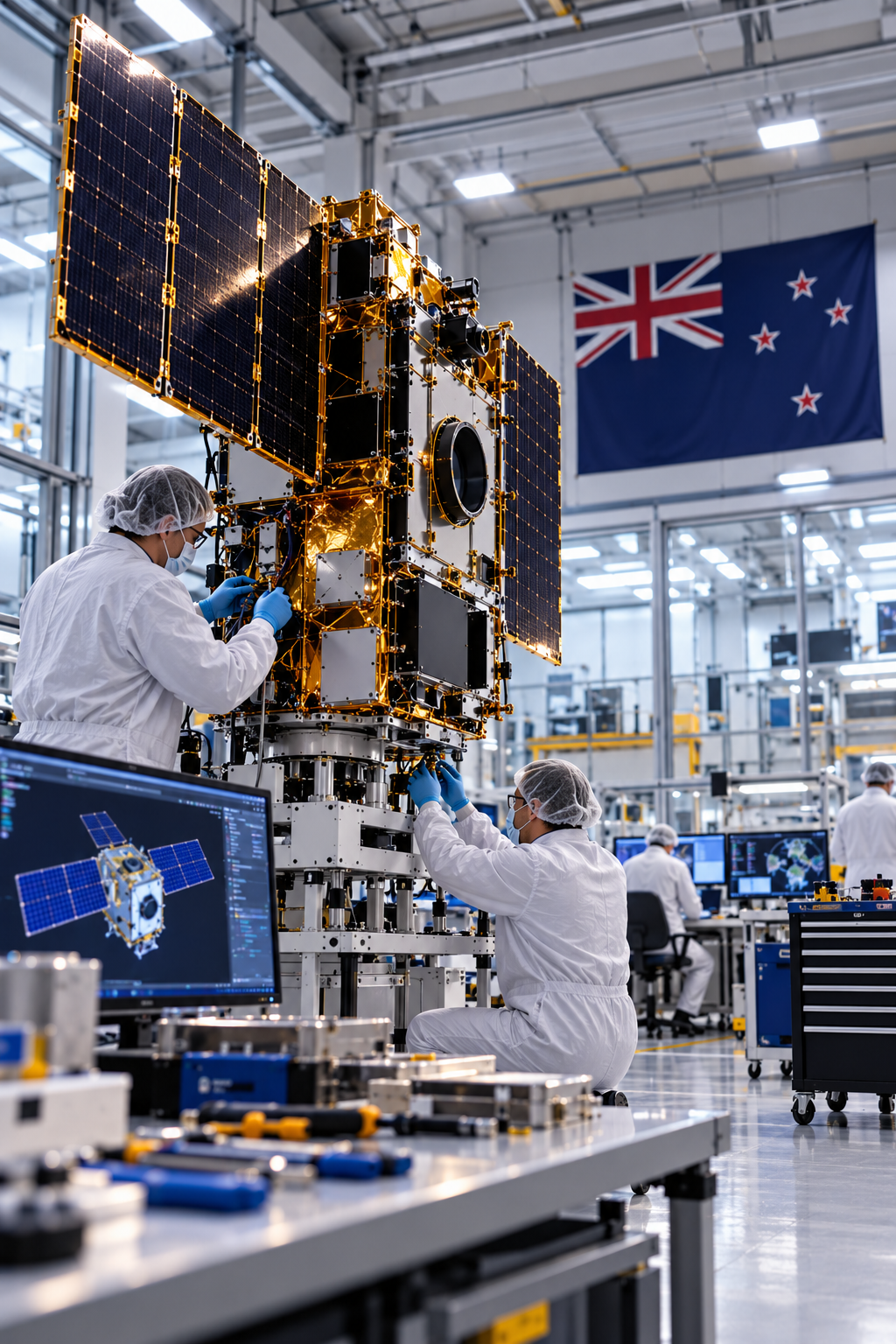
In the harsh and inaccessible environment of space, there are no second chances. Once a satellite is launched, physical repairs are virtually impossible, making reliability and redundancy essential for ensuring mission success. Every component and subsystem must be built and tested to the highest standards of performance and durability.
Component selection is the first line of defence. Satellites are equipped with radiation-hardened electronics capable of withstanding the damaging effects of cosmic rays and solar radiation. These components are designed to operate reliably over extended periods without degradation, even under the extreme conditions of space.
Redundancy is a fundamental design principle. For mission-critical systems, engineers often include backup components that can take over if a failure occurs. Examples include dual onboard computers, multiple communication antennas, redundant power lines, or alternative sensors. This approach ensures that the satellite can continue functioning even if one part fails, significantly enhancing mission resilience.
Testing is equally crucial. Before launch, satellites undergo extensive environmental and functional testing to replicate the rigours of space. These include vibration tests to simulate launch stresses, thermal vacuum tests to mimic space temperature extremes, and radiation exposure assessments. Testing also helps identify potential weaknesses or design flaws before deployment.
By integrating robust components, designing with built-in redundancy, and thoroughly validating performance, engineers can maximise satellite reliability, ensuring it continues to operate effectively throughout its designated mission life, regardless of the challenges faced in orbit.
9. Cost Considerations
Balancing performance with cost is a central challenge in satellite design, especially for commercial ventures, research institutions, and small satellite missions. Every decision, from component selection to launch strategy, must consider both technical requirements and budget constraints.
Miniaturisation has transformed space access. Progress in electronics and systems integration has led to the emergence of small satellites like CubeSats and microsatellites, providing affordable options for various missions. These small platforms can handle tasks such as Earth observation, scientific research, and technology testing at a much lower cost than traditional satellites.
Standardisation is another key cost-saving measure. By employing off-the-shelf components, modular designs, and standard interfaces, developers can cut down on engineering time, reduce risks, and lower production costs. This facilitates quicker deployment and smoother integration with existing systems, especially in satellite constellations or quick-launch operations.
Lifecycle costs need thorough assessment. It’s insufficient to only focus on building a low-cost satellite; engineers must also consider the full ownership cost, including manufacturing, testing, launch fees, insurance, ground operations, and end-of-life disposal. Cost-effectiveness is achieved when the mission’s value matches or exceeds its overall investment.
Ultimately, cost considerations shape the design philosophy of modern satellites. By leveraging innovation, efficient design practices, and scalable technologies, satellite developers can deliver capable spacecraft that meet mission goals without exceeding budgetary limits, making space more accessible and sustainable for a broader range of users.

10. Environmental Impact
Sustainability has become a key consideration in satellite design, reflecting the growing global emphasis on responsible space activity and environmental stewardship. As space becomes more congested and Earth-based environmental concerns intensify, satellite developers are being called to design with both orbital and planetary ecosystems in mind.
One of the most urgent challenges is space debris mitigation. Defunct satellites, spent rocket stages, and fragmentation from past missions pose a serious risk to active spacecraft and future launches. To address this, satellites are now required to include comprehensive end-of-life strategies. These can involve de-orbiting mechanisms, such as drag sails, propulsion systems, or controlled re-entry protocols, that ensure the satellite is safely removed from orbit at the end of its operational life. In geostationary orbit, satellites may be manoeuvred to designated graveyard orbits to lower collision risks.
On the ground, the focus shifts to eco-friendly materials and manufacturing practices. Satellite components are increasingly being made from low-toxicity, recyclable, or sustainably sourced materials, reducing environmental harm during production and disposal. Cleaner manufacturing processes and reduced use of hazardous substances help align space programs with international sustainability standards and environmental regulations.
Designing with environmental impact in mind is no longer optional; it’s a responsibility. By integrating sustainable practices into every stage of satellite development—from materials and manufacturing to orbital behaviour and disposal—the space industry can help create a safer orbital environment and a healthier planet, ensuring space remains accessible for future generations.
Conclusion
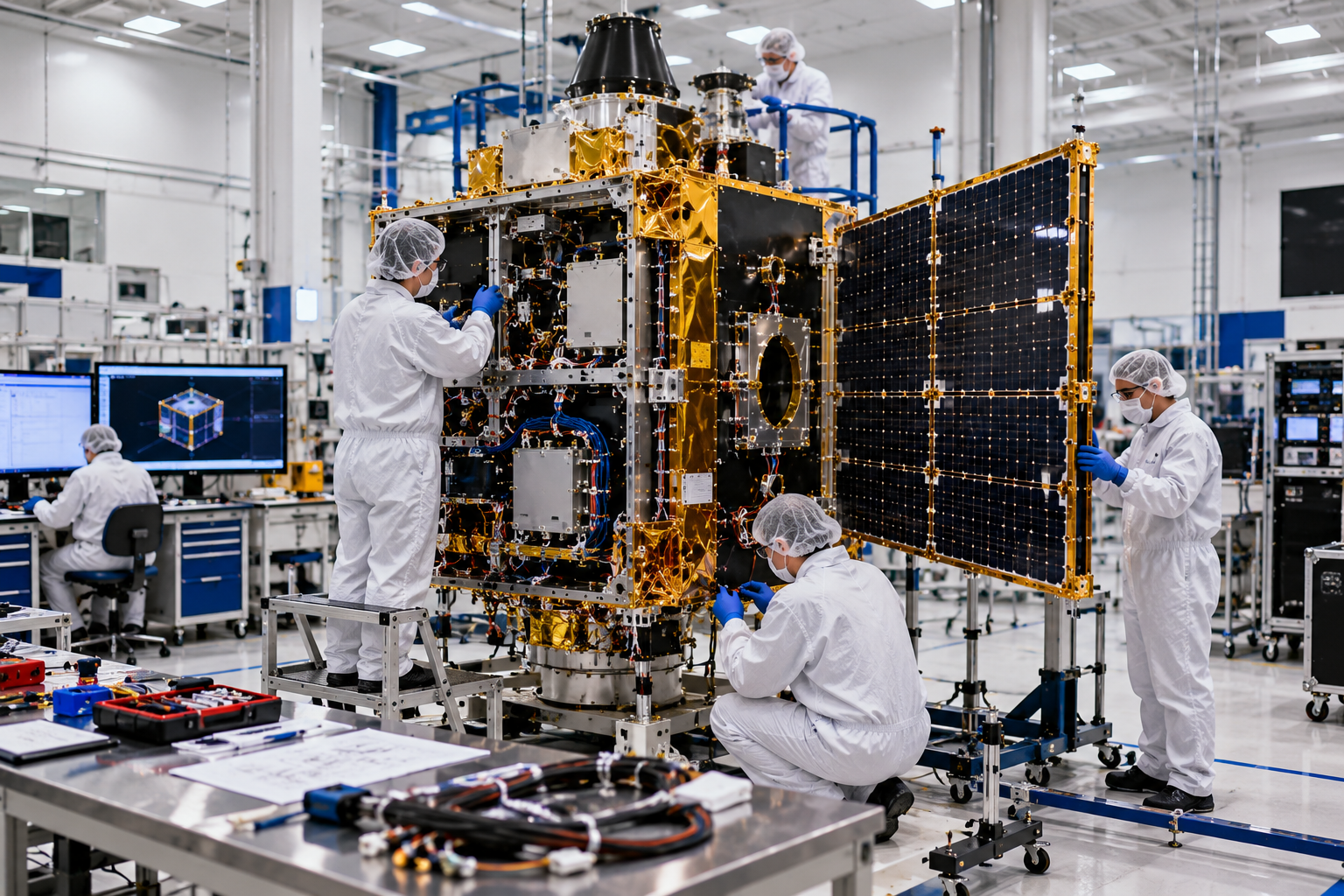
Designing a satellite is a complex and multidisciplinary task that requires careful consideration of mission goals, technical needs, and economic constraints. Every element, whether it’s selecting the right payload, optimising power systems, or planning for end-of-life disposal, contributes to the satellite’s overall performance, reliability, and sustainability.
Technological advancements are transforming what can be achieved. Miniaturised electronics, efficient propulsion, improved data handling, and eco-friendly materials are making satellites more capable and accessible than ever before. These innovations are propelling growth across industries, from climate monitoring and disaster response to global connectivity and scientific discovery.
As the number of satellites in orbit continues to increase, adopting best practices in design, manufacturing, and operations is essential. Responsible design not only guarantees mission success but also helps maintain the space environment for future generations.
Satellites are more than tools; they are catalysts for progress. With thoughtful, forward-looking design, they will keep expanding our understanding of Earth, enhancing life below, and propelling humanity further into space.