Ten Major Space Weather Events: How the Sun Shapes Life on Earth
The Sun is essential to life on Earth, providing the light and warmth that make our planet habitable. However, our nearest star is far from peaceful. Beneath its glowing surface, powerful magnetic forces can release enormous amounts of energy, sending radiation and electrically charged particles into space.
These events produce what scientists call space weather.
For most people, space weather is invisible. Occasionally, it creates spectacular displays of the Southern and Northern Lights. However, powerful solar activity can also interfere with satellites, disrupt radio communications, affect navigation systems and, in extreme circumstances, cause widespread electricity failures.
As modern society becomes increasingly dependent on technology, understanding the Sun's behaviour has become an important part of protecting essential infrastructure.
From the Carrington Event of 1859 to the powerful storms of the modern satellite era, history provides valuable examples of what can happen when solar activity reaches Earth.
Here are ten significant space weather events, what made them important, and the lessons they offer for the future.
Understanding Space Weather
Before examining these events, it helps to understand how activity on the Sun can affect technology on Earth.
The Sun continuously releases a stream of charged particles called the solar wind. Most of the time, Earth's magnetic field provides effective protection against the effects of this flow.
However, the Sun occasionally releases much more energetic disturbances.
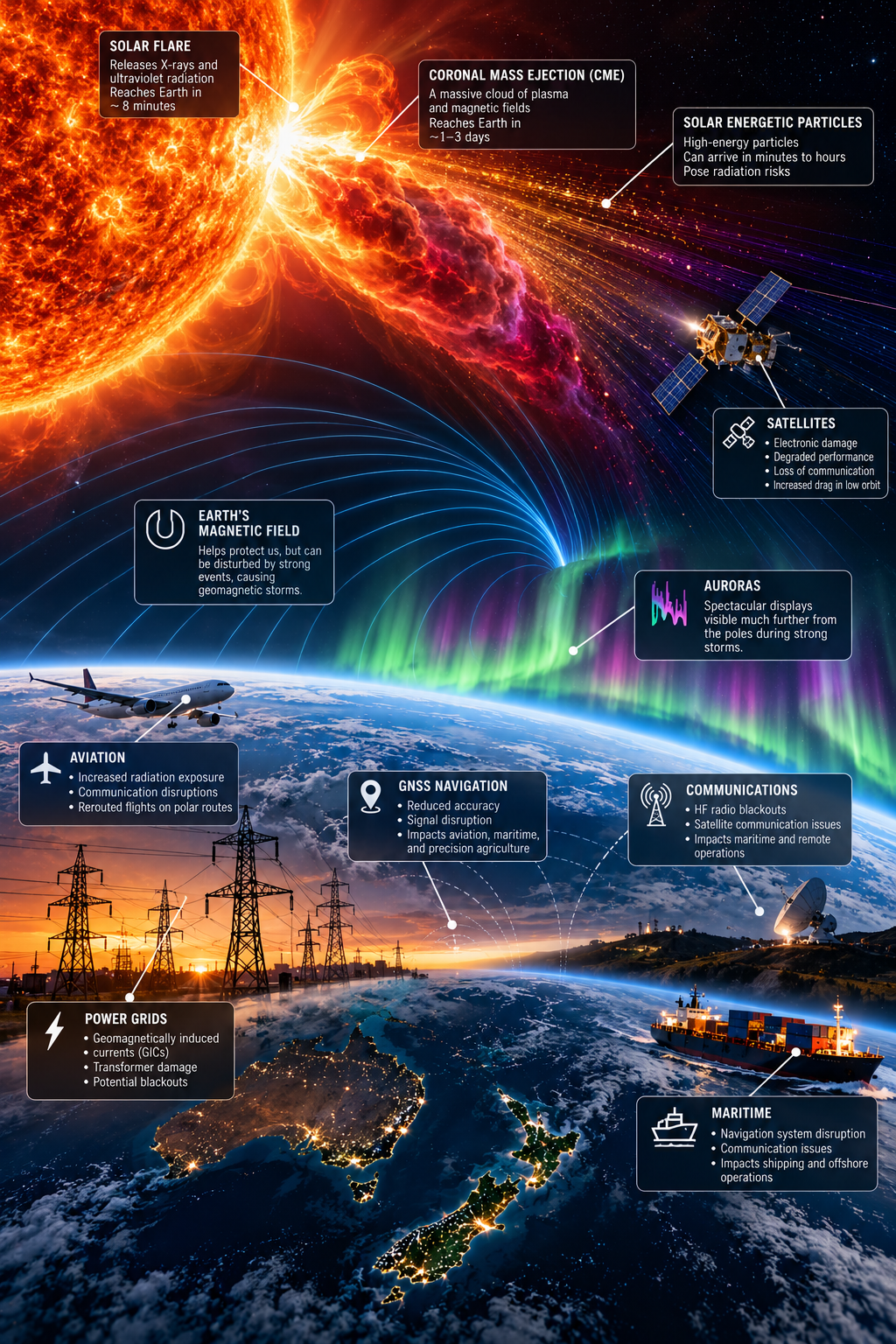
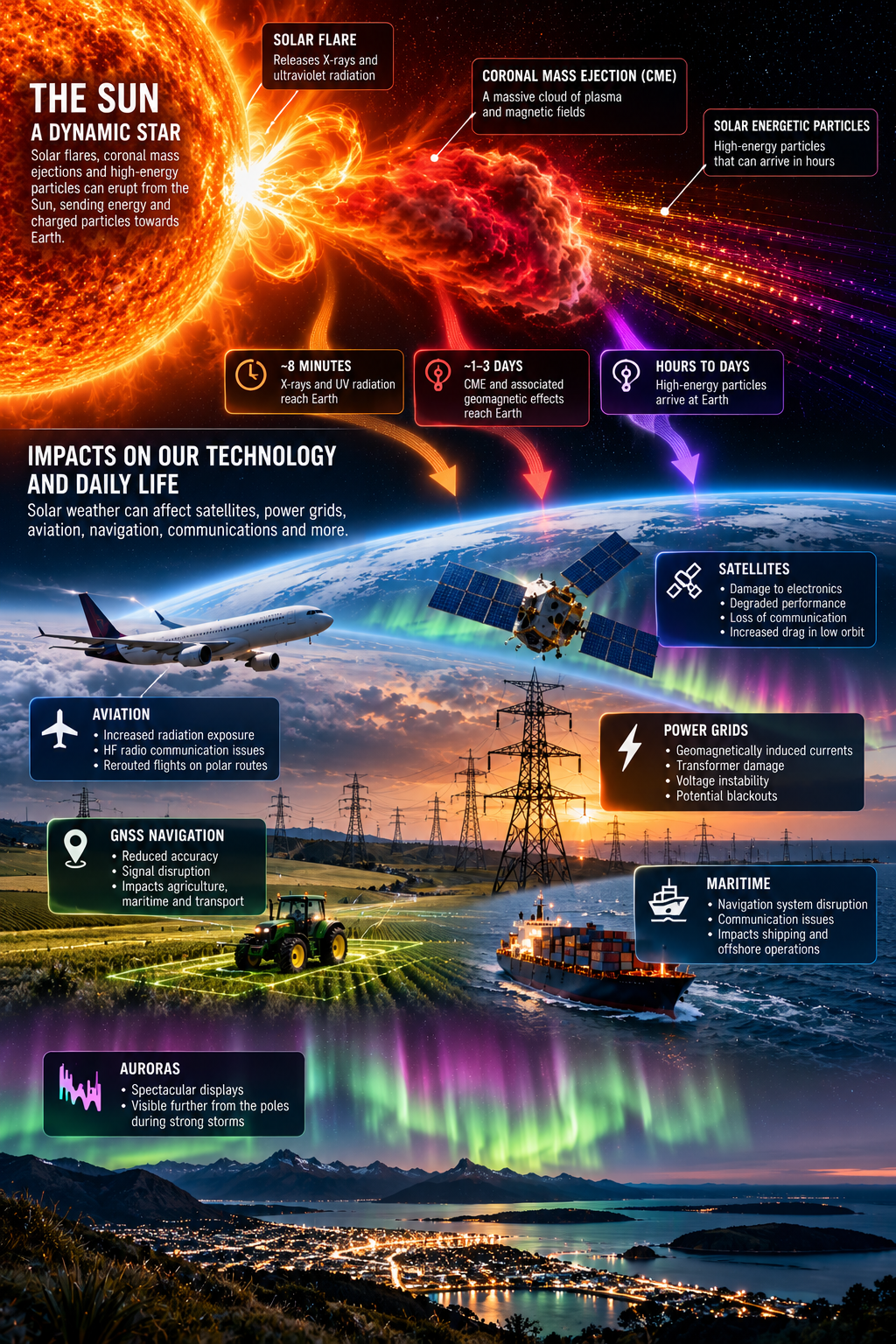
Solar flares are sudden bursts of electromagnetic radiation. Their X-rays and extreme ultraviolet radiation can affect Earth's upper atmosphere within approximately eight minutes, potentially disrupting high-frequency radio communications.
Coronal mass ejections (CMEs) are enormous clouds of plasma and magnetic fields expelled from the Sun. When directed towards Earth, they can take roughly one to three days to arrive and may produce geomagnetic storms.
Solar energetic particles are high-energy particles accelerated during powerful solar events. They can increase radiation exposure risks for spacecraft, astronauts and some high-altitude aviation operations.
These phenomena can occur together, but they have different effects.
Space weather forecasters use three main classification systems: geomagnetic storms (G1–G5), solar radiation storms (S1–S5), and radio blackouts (R1–R5). In each category, level 5 represents extreme conditions.
The following ten events illustrate why these distinctions matter.
1. The Carrington Event – September 1859
The Carrington Event remains one of the most famous examples of extreme space weather.
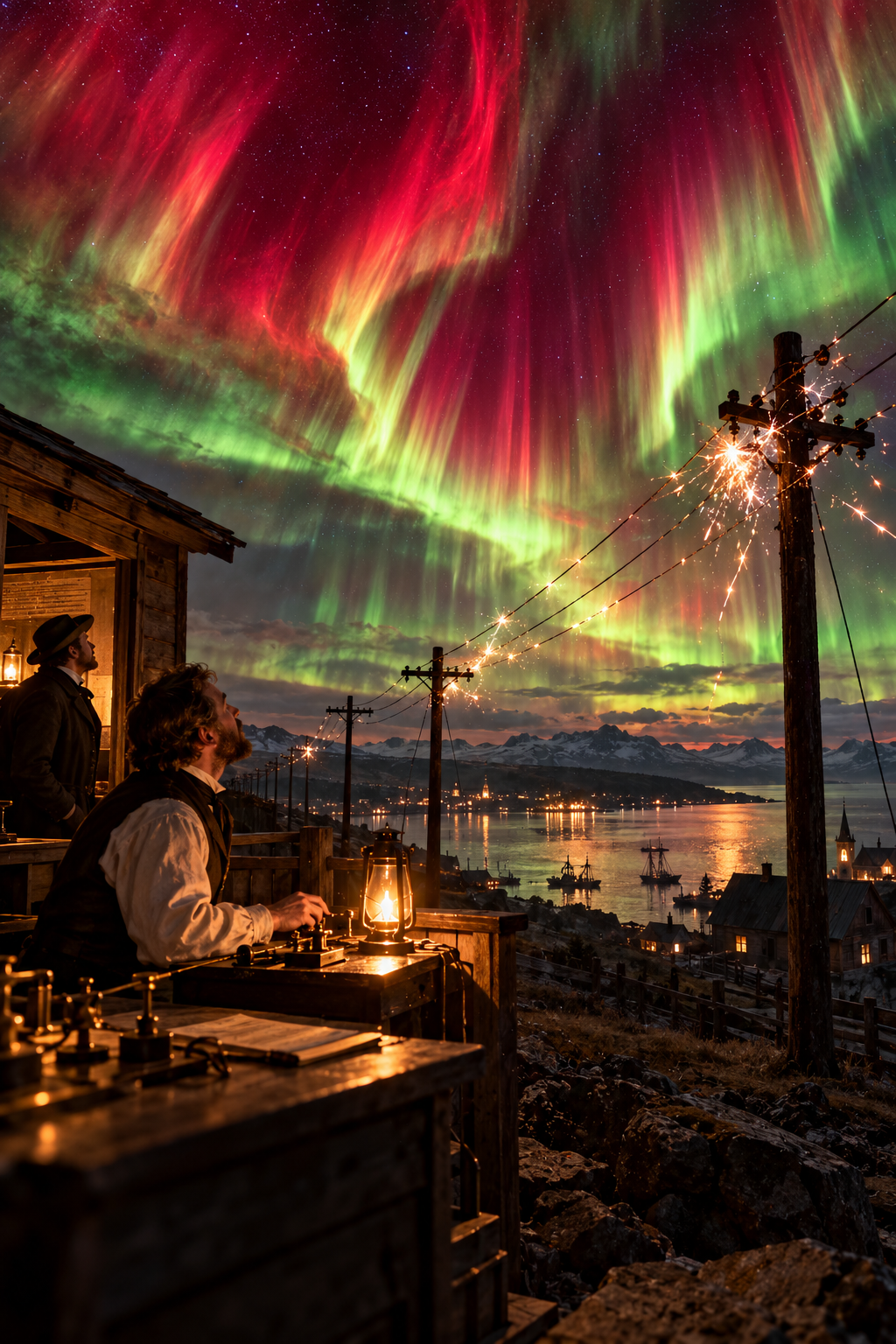
On 1 September 1859, British astronomer Richard Carrington observed an unusually bright solar flare. A powerful geomagnetic storm followed, causing dramatic disturbances to Earth's magnetic environment.
Auroras were observed at unusually low latitudes, including parts of the Caribbean. Telegraph networks, which represented some of the world's most advanced communications infrastructure, experienced serious disruption.
Some telegraph equipment sparked, and operators reported being able to transmit messages using currents induced by the storm even after disconnecting their normal power supplies.
The significance of the Carrington Event extends far beyond nineteenth-century communications.
Modern society depends on electricity, satellite navigation, telecommunications and interconnected infrastructure that did not exist in 1859.
Researchers have examined the potential consequences of a comparable storm today, with some economic scenarios projecting losses reaching trillions of dollars. However, these figures depend on assumptions about the storm's characteristics, infrastructure vulnerability and recovery times.
The lesson: Extreme space weather is a natural hazard capable of affecting technology across large geographical areas.
2. The New York Railroad Storm – May 1921
The May 1921 geomagnetic storm demonstrated that the Carrington Event was not an isolated phenomenon.
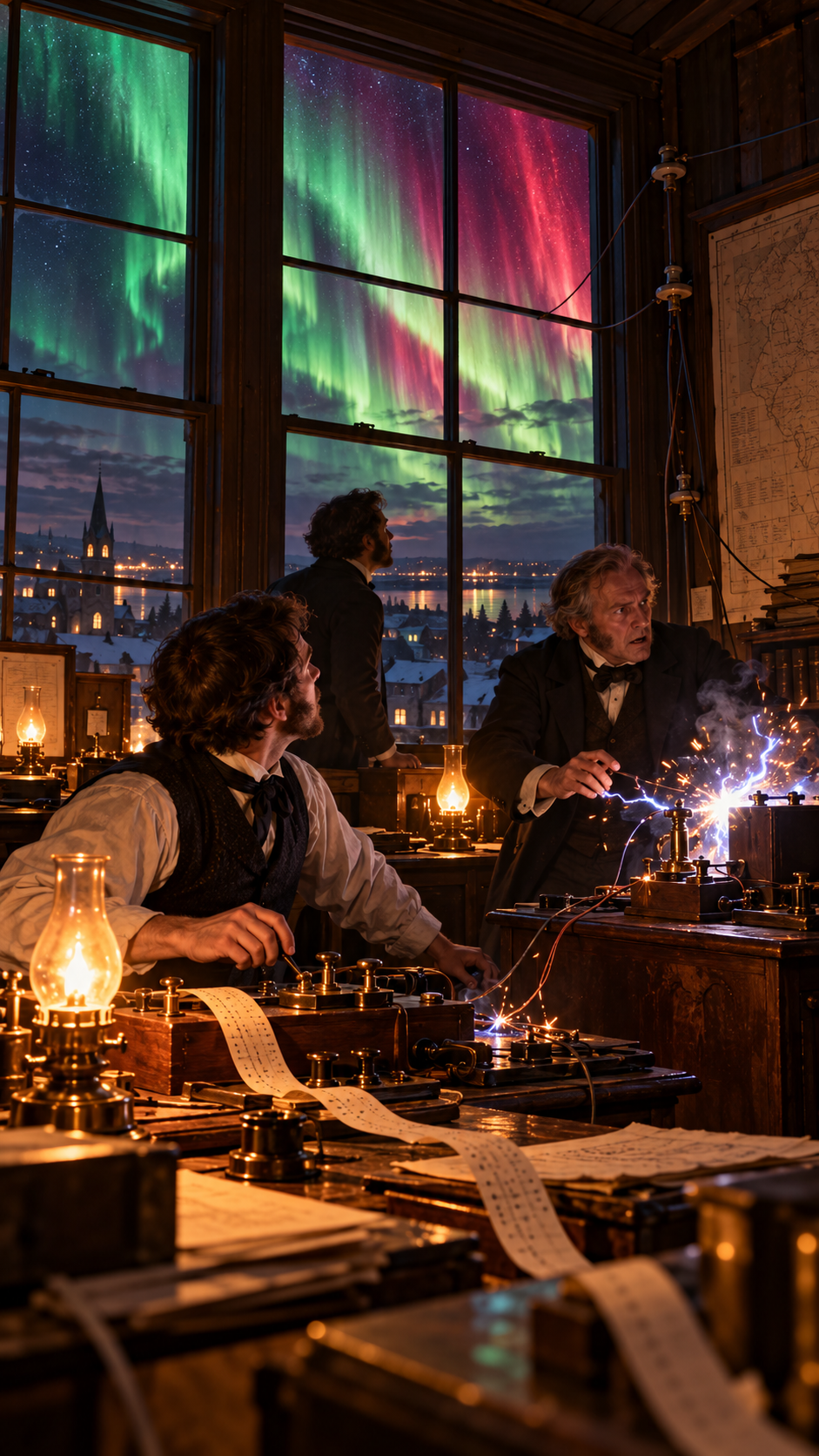
Sometimes called the New York Railroad Storm, this event caused substantial disturbances to electrical and communications systems.
Railway signalling infrastructure and telegraph equipment experienced failures, with reports of fires and damage linked to electrical currents generated during the storm.
Scientists studying historical magnetic observations have estimated that the storm's intensity may have been comparable to the Carrington Event.
By 1921, electrical infrastructure was becoming increasingly important to industrial societies.
The storm highlighted how long conductors, such as telephone and telegraph lines, could experience unwanted electrical currents when Earth's magnetic field changed rapidly.
This same principle remains relevant to modern electricity transmission networks.
The lesson: Infrastructure does not need to be located in space to be vulnerable to solar activity.
3. The Cold War Solar Storm – May 1967
One of the most concerning space weather incidents occurred during the Cold War.
On 23 May 1967, intense solar activity disrupted United States military radar and communications systems.
The interference affected radar systems used to detect potential missile threats, creating concern during a period of significant geopolitical tension.
Without an understanding of space weather, such disruptions could potentially have been mistaken for deliberate interference by an adversary.
Fortunately, military personnel were developing the ability to monitor solar activity and recognise its effects on communications and radar systems.
Research into the incident has highlighted the importance of these early forecasting capabilities in reducing the risk of misinterpretation.
The event did not establish that nuclear conflict was inevitable, but it demonstrated how naturally occurring interference could complicate military decision-making.
The lesson: Space weather awareness is important not only for technical reliability, but also for national security and avoiding incorrect assessments of hostile activity.
4. The Apollo-Era Solar Storm – August 1972
Between the Apollo 16 and Apollo 17 lunar missions, the Sun produced a series of powerful eruptions.
The events of early August 1972 released substantial amounts of high-energy solar particles.
Although no astronauts were operating on the lunar surface at the time, the event raised serious concerns about the radiation exposure that crews could have experienced during a mission.
Unlike astronauts aboard the International Space Station, crews travelling to the Moon spend considerable time beyond the strongest protection provided by Earth's magnetic environment.
An astronaut undertaking a spacewalk on the lunar surface during a sufficiently intense solar particle event could face a dangerous radiation dose without suitable shielding.
This event demonstrated the need for radiation monitoring, protected shelter areas and operational procedures that allow crews to respond to solar activity.
The lesson: Space weather forecasting is a critical part of protecting humans travelling beyond low Earth orbit.
5. The Quebec Blackout – March 1989
On 13 March 1989, a major geomagnetic storm caused one of the most significant electricity disruptions attributed to space weather.
The Hydro-Québec electricity transmission system experienced severe disturbances as changes in Earth's magnetic field induced unwanted electrical currents into the network.
These currents contributed to the operation of protective equipment and a rapid collapse of the transmission system.
Approximately six million customers lost electricity, with large areas experiencing outages lasting more than nine hours.
The incident demonstrated how geomagnetic disturbances can affect electricity networks through long transmission lines and vulnerable equipment.
Following the blackout, Hydro-Québec strengthened its monitoring and protection arrangements to reduce the likelihood of similar failures.
The event remains an important reference for electricity network operators worldwide.
The lesson: Power-grid resilience requires consideration of geomagnetic hazards alongside conventional risks such as storms, equipment failures and natural disasters.
6. The Anik Satellite Failures – January 1994
On 20 January 1994, geomagnetic activity contributed to failures affecting two Canadian communications satellites, Anik E1 and Anik E2.
Both spacecraft experienced problems involving their attitude-control systems, which maintain the orientation required for communications operations.
Anik E1 was restored relatively quickly, while Anik E2 remained unavailable for a much longer period.
The failures disrupted television, radio and communications services, highlighting society's growing dependence on satellites.
This event demonstrated that spacecraft can be affected by the charged-particle environment surrounding Earth, even without suffering a direct physical collision.
Energetic electrons can accumulate electrical charge within spacecraft materials and components, potentially leading to damaging discharges.
The incident also highlighted the importance of redundant systems and recovery procedures.
The lesson: Satellites require protection not only against the physical hazards of space, but also against the changing electrical and radiation environment.
7. The Bastille Day Storm – July 2000
Named after France's national holiday, the Bastille Day event began with a powerful solar eruption on 14 July 2000.
The eruption produced an intense solar radiation storm and subsequent geomagnetic disturbances.
High-energy particles affected spacecraft operations and disrupted aspects of satellite communications.
NASA research also identified temporary changes in the chemistry of Earth's upper atmosphere caused by the energetic particle bombardment.
The event occurred during a period when satellite communications, global positioning and other space-based services were becoming increasingly important to everyday life.
Although the International Space Station was already in orbit, its first long-duration crew did not arrive until November 2000.
Nevertheless, the storm helped demonstrate the radiation and operational hazards that future crewed missions would need to manage.
The lesson: Solar activity can produce several different hazards simultaneously, requiring coordinated monitoring of radiation, communications and geomagnetic conditions.
8. The Halloween Solar Storms – October–November 2003
During late October and early November 2003, the Sun produced a series of exceptionally powerful eruptions.
Known as the Halloween Storms, these events caused widespread disturbances affecting spacecraft, aviation, radio communications and electrical infrastructure.
In Sweden, geomagnetic activity contributed to a significant power outage.
Satellite operators reported anomalies, while aviation systems experienced navigation and communications degradation.
The United States Federal Aviation Administration's Wide Area Augmentation System, which improves GPS navigation performance for aircraft, suffered a prolonged interruption.
The storms demonstrated how different systems could be affected by the same period of intense solar activity.
They also occurred during an era when monitoring spacecraft were providing increasingly detailed observations of solar eruptions.
The lesson: Modern infrastructure is interconnected, and a major space weather event can create simultaneous challenges across several sectors.
9. The Solar Superstorm Near-Miss – July 2012
Not every significant solar eruption strikes Earth.
On 23 July 2012, an exceptionally powerful coronal mass ejection travelled through space along a trajectory that narrowly missed our planet.
NASA's STEREO-A spacecraft observed the event and provided valuable measurements of its speed and magnetic characteristics.
Researchers concluded that the eruption was potentially comparable to the Carrington Event.
Had Earth's position along its orbit been different, the storm could have produced a major geomagnetic disturbance.
However, because the eruption did not strike Earth, it did not cause the widespread terrestrial disruption sometimes associated with descriptions of the event.
The spacecraft observations helped scientists understand how successive solar eruptions can interact and increase the intensity of an event.
The lesson: The absence of damage does not necessarily mean the absence of a major solar event. Monitoring the wider space environment is essential for understanding extreme hazards.
10. The Gannon Solar Storm – May 2024
In May 2024, Earth experienced its most intense geomagnetic storm in more than two decades.
The event, subsequently named the Gannon Storm, was generated by a series of solar eruptions that combined to produce severe disturbances in Earth's magnetic environment.
The storm reached G5, the highest level on NOAA's geomagnetic storm scale.
Auroras appeared across unusually large geographical areas, including widespread displays of the Aurora Australis over New Zealand and Australia.
However, the event was far more than a spectacular light show.
Navigation systems experienced interference, some aviation routes were modified, and the expansion of Earth's upper atmosphere increased atmospheric drag on satellites in low Earth orbit.
In New Zealand, Transpower took precautionary action by temporarily removing selected transmission circuits from service to protect equipment against geomagnetically induced currents.
These measures helped reduce the risk to the electricity network, and the storm did not produce a nationwide blackout.
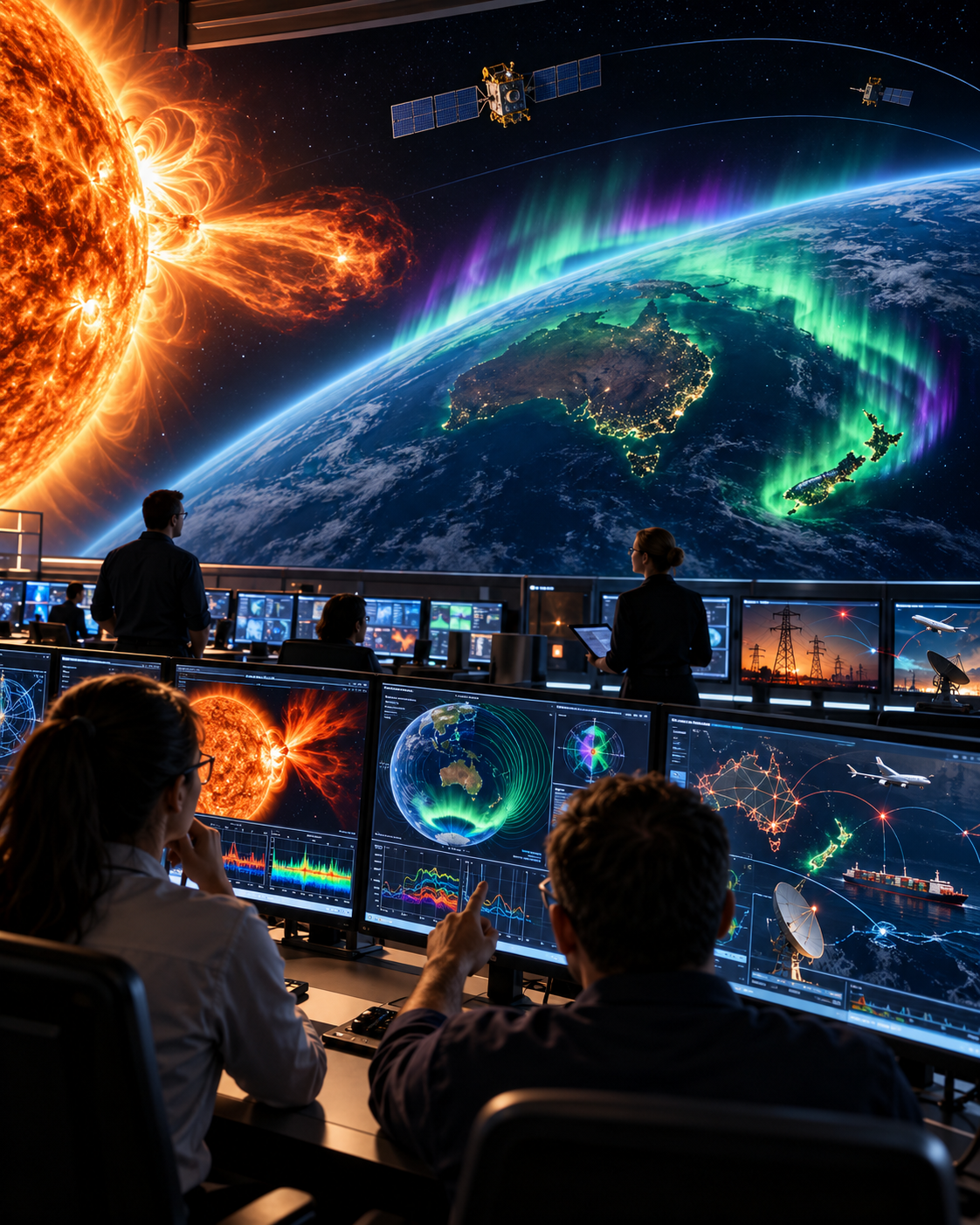
The Gannon Storm provided a modern demonstration of how effective monitoring and prepared operators can help manage severe space weather.
The lesson: Space weather is not simply a historical problem. It remains an operational hazard that affects New Zealand, Australia and the wider world.
A Recent Reminder: January 2026
On 19–20 January 2026, another major solar event reinforced the importance of space weather preparedness.
NOAA recorded a rare S4 solar radiation storm, the first at that severity since the 2003 Halloween period, together with G4 geomagnetic storm conditions.
The two classifications describe different aspects of the event.
The S4 classification indicates an elevated solar energetic particle environment, while G4 describes severe disturbances to Earth's magnetic field.
Researchers at the University of Otago's Solar Tsunamis project recorded significant geomagnetic activity over New Zealand.
The event demonstrated that a solar storm can present different levels of risk to satellites, aviation, navigation and ground infrastructure simultaneously.
How Space Weather Affects Everyday Life
Space weather can seem like a specialist subject associated mainly with satellites and astronauts.
In reality, its effects can extend across many activities that people rely upon daily.
Satellites and Space Operations
Satellites provide communications, weather forecasting, navigation, Earth observation and other essential services.
Solar radiation can interfere with their electronics, while geomagnetic storms can heat and expand Earth's upper atmosphere.
For satellites in low Earth orbit, this expansion increases atmospheric drag, changing their orbital paths and potentially increasing fuel consumption.
Operators may need to adjust spacecraft positions, conduct additional collision assessments or temporarily suspend sensitive operations.
Electricity Networks
Geomagnetic storms can induce electrical currents in long transmission lines.
These currents may cause transformer heating, equipment alarms and interruptions to electricity distribution.
Electricity operators can reduce risk through monitoring, network reconfiguration and temporarily removing vulnerable equipment from service.
The May 2024 event demonstrated how these precautions can be applied in New Zealand.
Aviation and Maritime Operations
Long-distance aircraft rely on communications and navigation systems that can be affected by space weather.
High-frequency radio communications are particularly important on remote routes where other communications infrastructure may be limited.
Solar radiation and ionospheric disturbances can cause communication degradation and navigation inaccuracies, potentially requiring operators to change routes or procedures.
Maritime operations may also experience degraded satellite navigation or communications, particularly in remote ocean regions.
GPS and Precision Agriculture
Global Navigation Satellite Systems (GNSS), including GPS, rely on signals travelling through Earth's ionosphere.
During geomagnetic disturbances, changes in the ionosphere can reduce the accuracy or availability of positioning services.
This can affect surveying, aircraft navigation, maritime operations and precision agriculture.
Modern farming equipment increasingly uses high-accuracy satellite positioning for planting, spraying and automated machinery guidance.
During the May 2024 storm, some agricultural operators experienced positioning problems that interrupted field operations.
Preparing for the Next Major Solar Storm
The Sun follows an approximately eleven-year cycle of magnetic activity.
Solar storms can occur throughout this cycle, although major events become more likely around periods of increased activity.
Fortunately, space weather forecasting has improved considerably since the nineteenth century.
Spacecraft monitor solar activity and the solar wind, while ground-based instruments measure disturbances in Earth's magnetic field.
Organisations such as NOAA's Space Weather Prediction Center and Australia's Bureau of Meteorology provide forecasts, alerts and warnings.
Some solar eruptions can be observed one or more days before their associated CME reaches Earth. However, precisely forecasting a storm's severity remains difficult until spacecraft measure the approaching solar wind and its magnetic field.
Preparedness therefore depends on more than accurate forecasting.
Satellite operators need contingency procedures. Electricity companies need suitable protection strategies. Aviation and maritime operators need alternative communications and navigation arrangements.
For New Zealand, these considerations are particularly relevant because of the country's extensive maritime responsibilities, remote aviation routes, reliance on satellite services and geographically distributed electricity transmission network.
Continued investment in space weather monitoring, resilient infrastructure and operational planning can reduce the consequences of future events.
Conclusion: The Sun Is Part of Our Operating Environment
The history of space weather shows that the Sun has always influenced Earth's environment.
What has changed is humanity's dependence on technology.
The telegraph systems disrupted during the Carrington Event have evolved into vast networks of satellites, electrical infrastructure, navigation systems and communications services.
Each technological advancement has created new opportunities, but also new vulnerabilities.
The events of 1859, 1921, 1989, 2003 and 2024 demonstrate that powerful solar activity can affect essential infrastructure, while the Apollo-era and 2012 events highlight the risks that might otherwise remain unseen.
For New Zealand and Australia, space weather is especially relevant to industries operating across large distances and remote environments.
The challenge is not to prevent solar storms. That is beyond humanity's capability.
Instead, the objective is to understand their behaviour, anticipate their effects and develop systems capable of continuing operations when conditions deteriorate.
The Sun makes life on Earth possible. Understanding its hazards will help us protect the technologies on which modern life depends.