10 Key Considerations in Designing a Re-Entry Vehicle
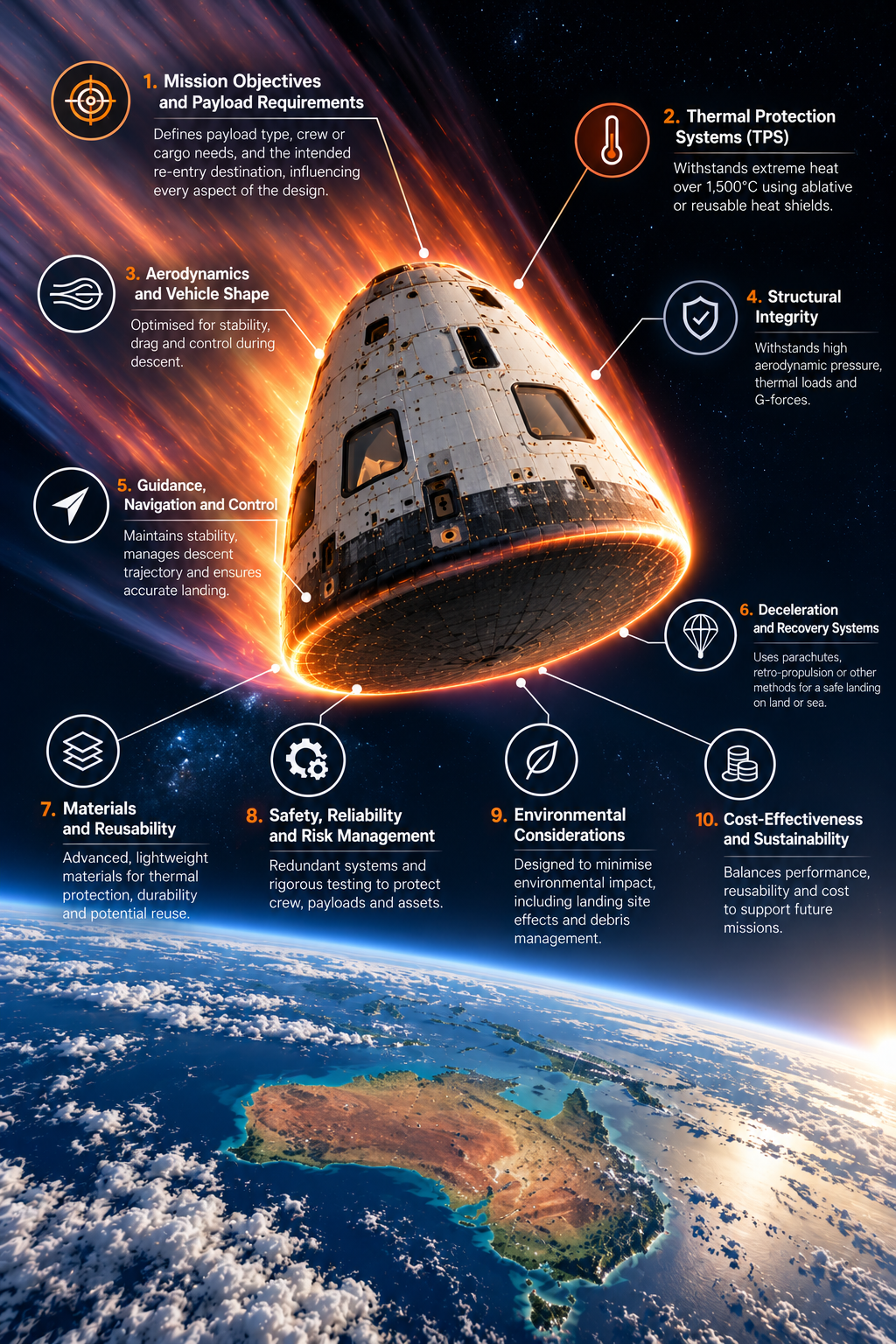
Designing a re-entry vehicle is a complex and high-stakes engineering task. These spacecraft need to withstand extreme conditions as they enter Earth’s atmosphere, facing intense heat, aerodynamic pressure, and high G-forces. Ensuring the safety of crew, scientific payloads, or sensitive cargo is crucial, making re-entry one of the most demanding phases of any mission. Engineers must carefully design the vehicle’s heat shield, structure, and trajectory to ensure thermal protection and structural integrity. Materials must be chosen for their ability to absorb or deflect heat without adding excessive mass. Besides physical durability, flight dynamics must be optimised to maintain stability, minimise deceleration forces, and guide the vehicle accurately to its planned landing site. Environmental and operational factors also play a key role. Designers need to consider recovery methods, landing environments (land, sea, or autonomous return), and potential reuse. Increasingly, sustainability and cost-effectiveness influence design strategies, especially for commercial missions and crewed flights. This article covers the essential design considerations for re-entry vehicles, looking at how engineers balance performance, safety, and new sustainability requirements. From capsule re-entries to winged vehicles, every decision is driven by the need to return safely from space.
1. Mission Objectives and Payload Requirements
The core of any re-entry vehicle design is a clear understanding of its mission goals and payload needs. These two factors influence almost every aspect of the vehicle’s structure, systems, and performance characteristics.
Payload Type:
What the vehicle is built to carry—be it astronauts, scientific gear, or cargo—directly affects its design. A crewed re-entry vehicle must have strong life-support systems, thermal protection, and advanced safety features to shield human occupants during the intense descent. Conversely, an uncrewed vehicle transporting delicate instruments or cargo might focus on structural strength, shock absorption, and temperature control to protect the payload, without requiring systems to sustain human life.Re-Entry Destination:
The intended re-entry site greatly influences the vehicle's thermal protection systems, aerodynamics, and landing methods. Returning to Earth calls for designs that consider our atmosphere’s specific density and composition, along with the planet’s gravity and high entry speeds. Landing on solid ground calls for different deceleration and recovery methods than splashdowns in oceans or controlled landings on Mars, which features a thinner atmosphere and lower gravity.
By clearly defining the mission profile and understanding the unique needs of its payload and destination, engineers can design a re-entry vehicle to achieve optimal performance, survivability, and recovery. These basic considerations ensure that the vehicle can meet its purpose, whether delivering cargo safely to Earth or returning a crew home from orbit.
2. Thermal Protection Systems (TPS)
Thermal Protection Systems (TPS) are among the most vital parts of a re-entry vehicle because they must handle the intense heat generated when re-entering the atmosphere. As a spacecraft descends at hypersonic speeds, it faces extreme friction with atmospheric particles, creating temperatures that can go over 1,500°C (2,700°F). Without proper shielding, these conditions would quickly ruin the vehicle and its cargo.
Heat Shields:
Re-entry vehicles use either ablative or reusable heat shield systems to withstand and dissipate this thermal energy.
Ablative Heat Shields work by slowly burning away during re-entry, a process that takes heat away from the vehicle. This method was famously used on NASA’s Apollo capsules and remains a dependable solution for one-time missions.
Reusable Heat Shields, such as those made from reinforced carbon-carbon or advanced ceramic tiles, are designed to survive multiple re-entries. Used on the Space Shuttle and currently being refined for modern vehicles like SpaceX’s Starship, these systems need sophisticated materials and careful checks after each flight to keep them reliable.
Thermal Distribution:
The shape of the vehicle plays an important role in managing heat loads. Blunt-body designs, where the front of the vehicle is rounded and wide, create a shockwave that deflects much of the heat away from the surface. This shape slows the vehicle down and spreads the thermal energy over a bigger area, reducing peak temperatures at any one point on the surface.
Choosing and fine-tuning a TPS is a balancing act between safety, cost, and reusability. Whether using ablative materials for simplicity or reusable systems for longer missions, the decision directly influences mission design, turnaround time, and overall vehicle performance.
3. Aerodynamics and Vehicle Shape
The aerodynamic design of a re-entry vehicle is crucial to its stability, thermal performance, and ability to safely slow down through the atmosphere. The shape not only determines how the vehicle interacts with atmospheric forces but also affects the level of control engineers and astronauts have during descent.
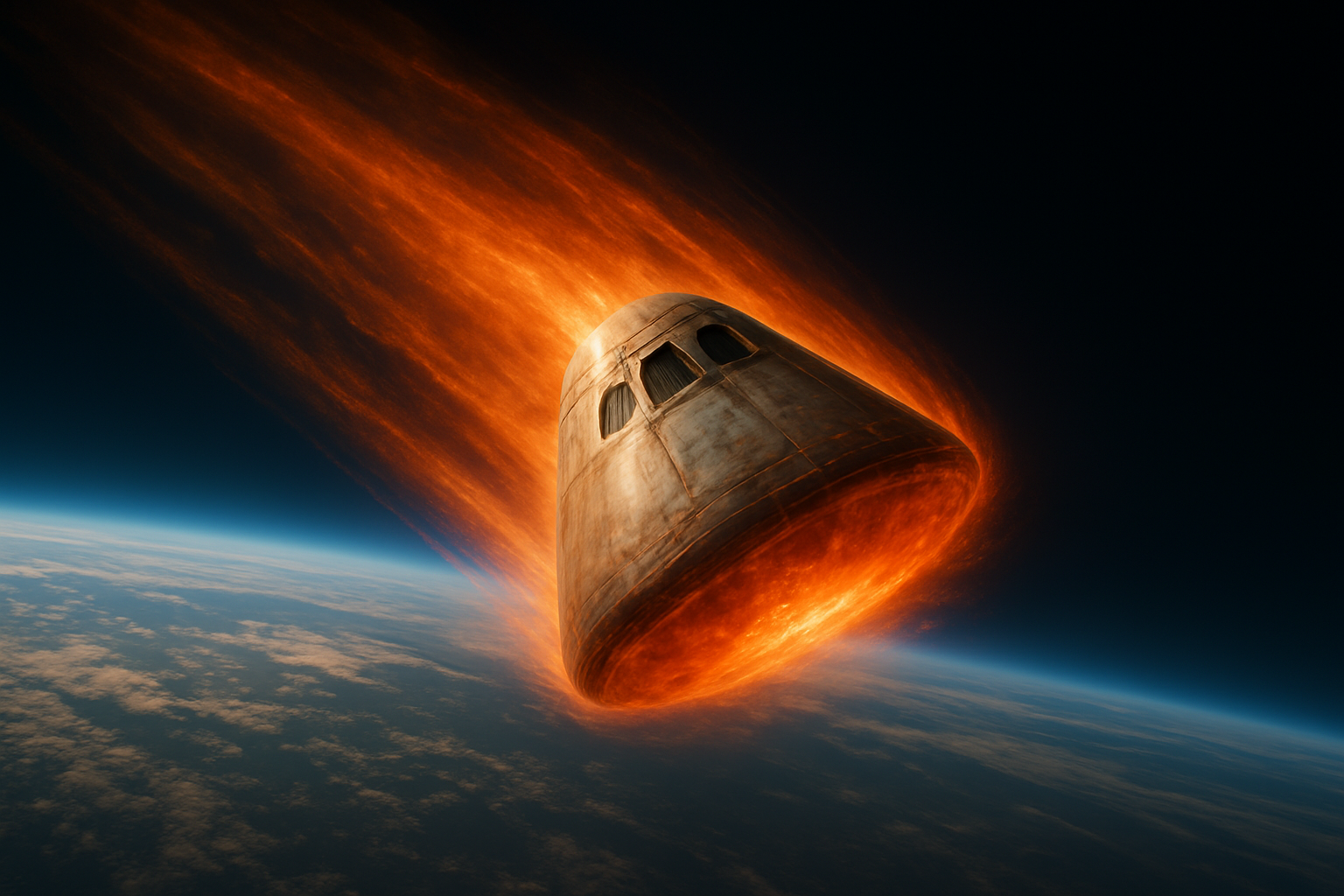
Blunt Bodies: Blunt-body shapes are commonly used in re-entry capsules, such as NASA’s Orion and the historic Apollo modules. These designs maximise drag, helping the vehicle slow down quickly as it re-enters the atmosphere. More importantly, they create a shockwave in front of the vehicle that deflects much of the intense re-entry heat, reducing the thermal load on the heat shield. While not designed for aerodynamic precision, blunt bodies are reliable and structurally efficient.
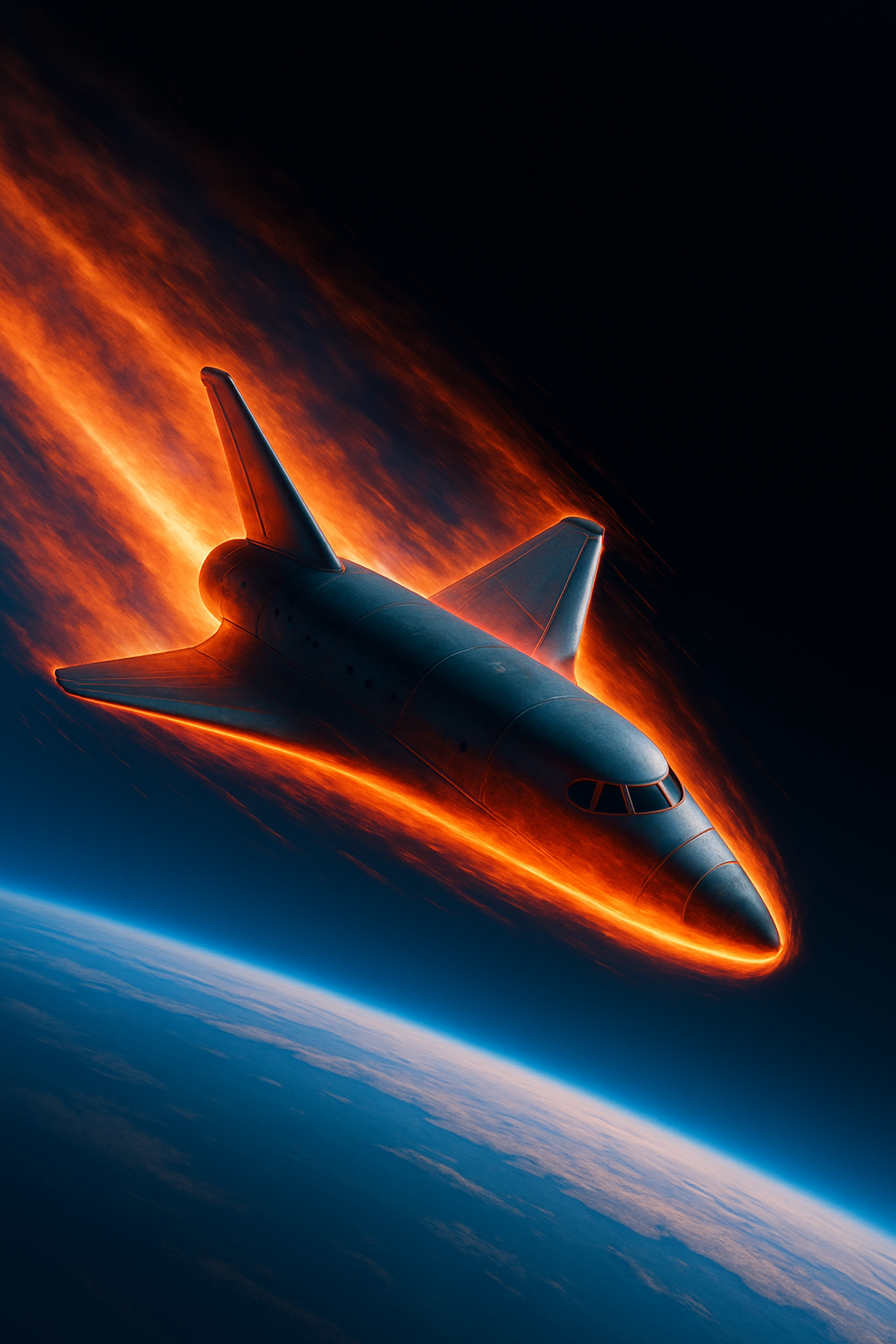
Lifting Bodies: Vehicles like the Space Shuttle and upcoming spaceplanes use lifting-body or winged designs to generate aerodynamic lift during descent. This allows for controlled gliding and more accurate landings, including reaching specific runways or avoiding poor weather zones. However, this approach adds complexity, requiring reinforced structures, advanced flight control systems, and increased thermal protection over larger surfaces.
Stability: Maintaining stability during re-entry is vital to prevent tumbling, which can cause catastrophic failure. Engineers must carefully balance the vehicle’s centre of gravity, mass distribution, and aerodynamic surfaces to ensure a controlled orientation throughout descent. Even slight instabilities can lead to uneven heating or dangerous re-entry angles.
In summary, the choice of shape—whether a blunt capsule or lifting body—reflects the mission’s priorities. Whether prioritising simplicity and safety or manoeuvrability and reusability, aerodynamic design remains a central pillar of re-entry vehicle engineering.
4. Structural Integrity
Structural integrity is a fundamental element of re-entry vehicle design, ensuring the spacecraft can withstand the intense physical stresses experienced during atmospheric descent. As a vehicle plunges back to Earth at hypersonic speeds, it encounters powerful aerodynamic forces, extreme temperatures, and rapid deceleration, all of which exert significant strain on its structure.
Material Selection: Engineers must choose materials that are both lightweight and exceptionally strong. Common options include titanium alloys, aluminium-lithium composites, and advanced carbon fibre-reinforced polymers. These materials provide high strength-to-weight ratios, enabling the vehicle to be durable without becoming excessively heavy, a crucial factor in launch and re-entry efficiency. In crewed missions, the structural shell must not only safeguard equipment but also offer a survivable environment for astronauts.
Vibration and G-Forces: Re-entry exposes the vehicle to violent shaking and high g-forces, especially during peak deceleration. Uncrewed missions need to protect sensitive instruments, while human-rated vehicles require additional damping systems to prevent injury or trauma to crew members. Shock-absorbing parts and carefully designed load paths help distribute forces and reduce risks.
Sealing and Insulation: Effective sealing is vital to prevent high-pressure, superheated atmospheric gases from breaching the vehicle’s interior. This involves using high-performance gaskets, sealants, and thermal barriers. Internally, insulation shields avionics, life-support systems, and payloads from the extreme thermal environment.
In essence, structural integrity involves more than just resisting re-entry forces; it also means maintaining the function and safety of all onboard systems. Any failure in the structure can be catastrophic, which is why this aspect of design undergoes rigorous testing, simulation, and validation.
5. Landing Systems
The final stage of a re-entry mission, the landing, is just as vital as launch and descent. A well-designed landing system guarantees the safe delivery of crew, cargo, or scientific payloads to the surface. It must work flawlessly after enduring extreme temperatures, vibrations, and high-speed re-entry.
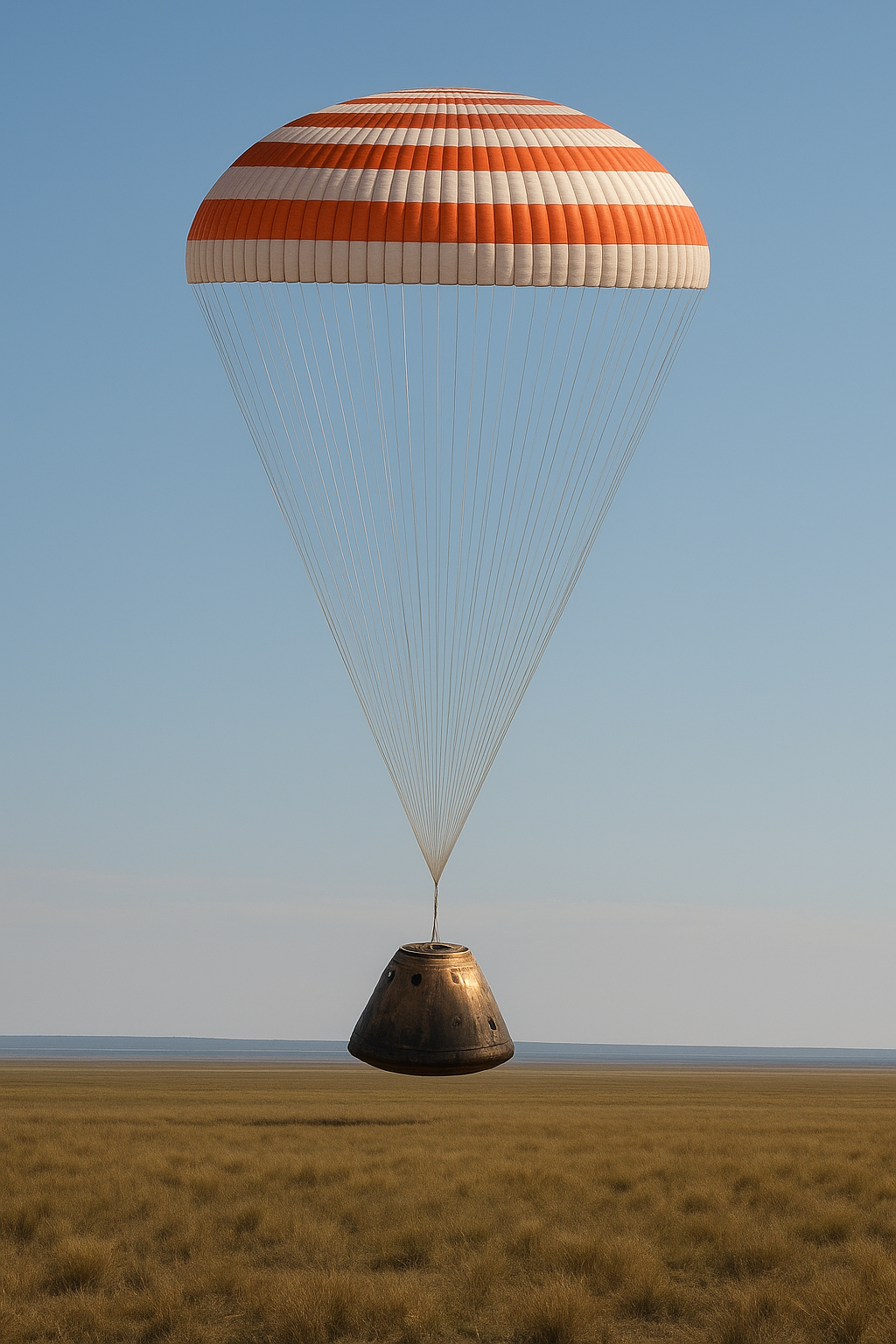
Parachutes: Parachute systems are the most common way to slow re-entry capsules during the final part of descent. Deployed at high altitudes and speeds, they gradually slow the vehicle, reducing impact forces. These systems need to be carefully engineered and tested to deploy reliably, even in tough atmospheric conditions. Vehicles like NASA’s Orion and SpaceX’s Crew Dragon depend on multi-stage parachute systems to control descent and achieve soft landings.
Airbags: For missions targeting uneven or unpredictable terrain, such as planetary landers, airbags offer an effective cushioning method. NASA’s Mars Pathfinder used large, inflatable airbags to absorb landing shocks, allowing the vehicle to bounce safely to a stop on the Martian surface. While less common for Earth landings, airbags provide a lightweight, passive solution in specific mission profiles.
Powered Landings: Modern spacecraft like SpaceX’s Dragon and Starship include retro-propulsion systems, small thrusters that fire during descent to slow the vehicle and guide it for a precise, upright landing. This method allows reusability and enables targeted touchdowns, which are especially useful for quick recovery and cost-efficient operations.
Splashdown vs. Land Recovery: Re-entry vehicles can be designed to land in the ocean or on solid ground. Ocean splashdowns are simpler and less risky in early test flights, whereas land recoveries allow quicker access and can lower overall mission costs. The choice depends on mission goals, payload sensitivity, and available recovery infrastructure.
A reliable landing system is essential for mission success, safety, and reusability.
6. Life Support and Crew Safety
In crewed re-entry missions, astronaut safety remains the highest priority. The vehicle must be designed not only to withstand the harsh conditions of re-entry but also to safeguard its human occupants from various hazards.
Environmental Controls: Life-support systems are crucial for maintaining a liveable environment inside the crew cabin. These systems regulate oxygen levels, remove carbon dioxide, and control temperature and humidity. During re-entry, when external conditions are extreme, maintaining internal stability is vital for crew comfort and survival. Redundancy and fail-safe mechanisms are incorporated to ensure continuous operation.
Radiation Shielding: Throughout the mission, especially during extended periods in orbit or deep space, astronauts are exposed to cosmic rays and solar radiation. Adequate shielding in the vehicle’s structure helps to reduce this exposure to safe levels. Materials such as polyethylene and specialised metal composites are used to protect against harmful radiation without significantly increasing weight.
Escape Systems: Safety also involves preparing for worst-case scenarios. Launch escape systems (LES) and abort mechanisms allow the crew module to rapidly detach from the launch or re-entry vehicle if a critical failure occurs. These systems, such as the LES on NASA’s Orion capsule, utilise powerful rockets to propel the crew to safety, followed by parachute recovery.
Every element of the re-entry vehicle’s design, from structure to systems, must prioritise the health and safety of its human occupants, ensuring their safe return to Earth under all conditions.
7. Navigation and Guidance Systems
Accurate navigation and guidance are vital for the success of any re-entry mission. As the vehicle descends through the atmosphere at hypersonic speeds, even minor deviations in trajectory can lead to missed landing zones or increased structural stress. To achieve precision, re-entry vehicles are equipped with advanced systems that manage real-time adjustments and data tracking under extreme conditions.
Autonomous Systems: Modern re-entry vehicles are designed to operate independently during descent, particularly during blackout periods when ground communication might be disrupted. These onboard systems use pre-programmed algorithms and real-time data to control orientation, adjust trajectory, and regulate descent speed. Autonomous guidance is vital for accurate landings, especially when aiming for specific landing pads or narrow recovery zones.
Heat-Tolerant Sensors: The re-entry environment exposes all onboard systems to intense heat, pressure, and vibrations. Navigation and guidance sensors must withstand these tough conditions while maintaining accurate performance. Inertial measurement units (IMUs), gyroscopes, accelerometers, and GPS receivers provide real-time data on the vehicle’s position, velocity, and attitude. These instruments are often protected with heat-resistant materials to ensure reliable operation throughout descent.
Ground Communication: While independence is crucial, keeping communication with mission control is still important. Ground stations monitor the vehicle’s progress, send telemetry updates, and can intervene if unexpected issues occur. During periods of plasma-induced signal blackout, usually in the hottest part of re-entry, systems are designed to operate on their own until communication is restored.
Together, these systems guarantee that the vehicle follows a safe and accurate descent path, reducing risks and enabling successful recovery. Navigation and guidance technologies continually improve precision, autonomy, and reliability in modern re-entry missions.
8. Reusability and Cost Considerations
Reusability has become a key goal in modern aerospace design, as space agencies and private companies aim to reduce the high costs and environmental impact of spaceflight. Designing re-entry vehicles for reuse requires a shift in materials, systems, and operational planning.
Durable Materials: Reusable re-entry vehicles must be constructed using materials that can withstand repeated exposure to extreme heat, pressure, and vibration without significant degradation. Advanced composites, heat-resistant ceramics, and reinforced carbon-carbon materials are commonly used to maintain structural and thermal integrity over multiple flights.
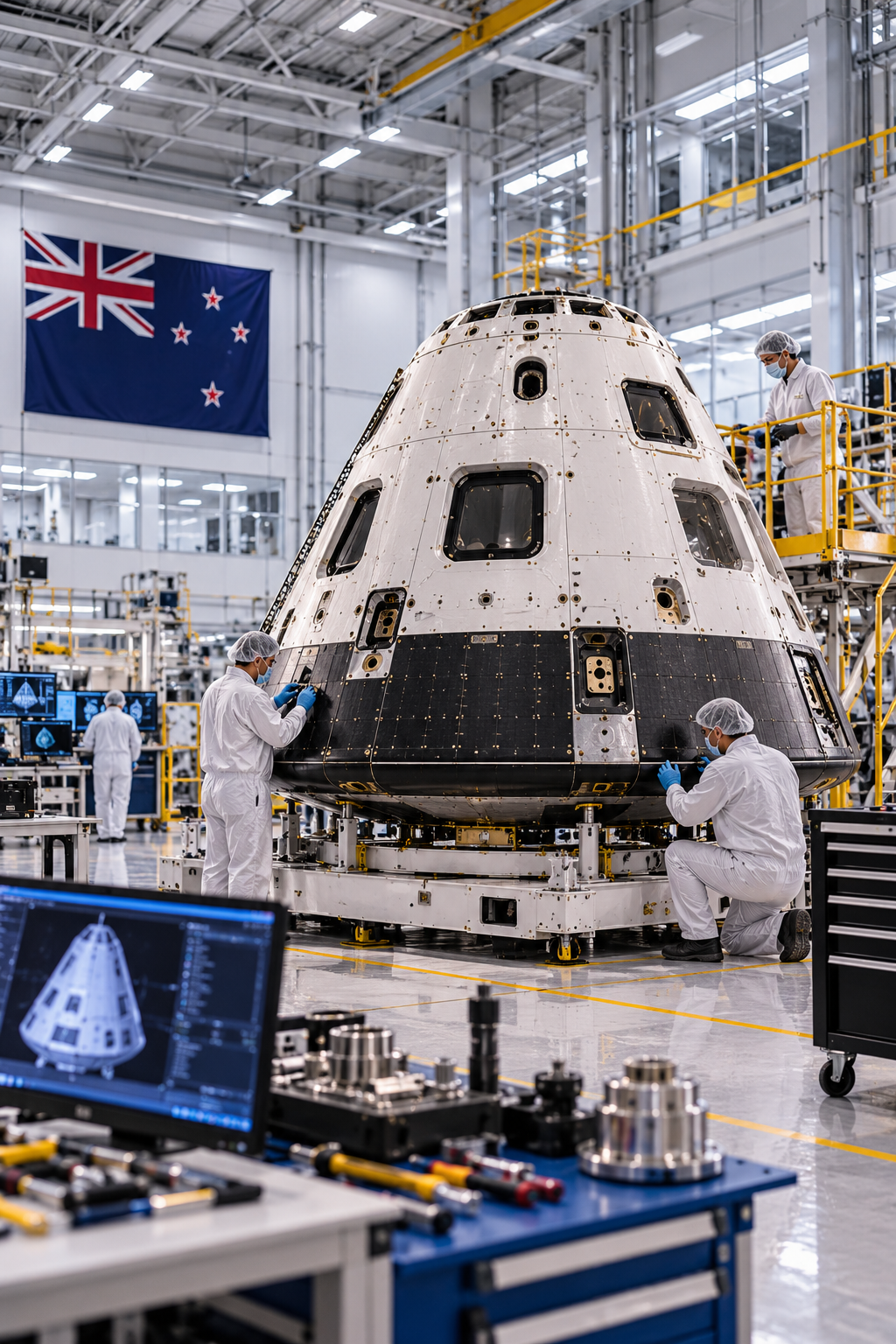
Inspection and Refurbishment: Operational efficiency depends on quickly inspecting and refurbishing vehicles between missions. This involves designing components that are easy to access and assess, as well as integrating health-monitoring sensors that provide real-time data on wear and tear. The goal is to minimise turnaround time while ensuring safety and reliability.
Modular Designs: Incorporating modularity into vehicle design allows for faster and more cost-effective maintenance. Instead of overhauling entire systems, engineers can swap out damaged or worn parts—such as heat shield tiles, thrusters, or avionics modules—quickly and easily. This approach reduces downtime and prolongs the operational lifespan of the vehicle.
By emphasising reusability, aerospace companies can lower launch costs, increase launch frequency, and reduce the environmental impact of missions. Vehicles like SpaceX’s Dragon and Starship are leading this shift, demonstrating how clever design choices can make spaceflight more sustainable and economically viable.
9. Environmental Impact
Designing re-entry vehicles with environmental responsibility in mind is becoming increasingly important as space activities ramp up. Engineers must consider not only the vehicle’s direct impact on Earth’s ecosystems but also its role in maintaining a sustainable orbital environment.
Space Debris: Components that are jettisoned during re-entry, such as heat shields, fuel tanks, or service modules, should be designed to fully disintegrate in the atmosphere. This helps prevent the creation of additional space debris, which poses collision risks to satellites and spacecraft.
Atmospheric Emissions: The materials and propulsion systems used during re-entry can release gases and particles into the atmosphere. Designers are exploring more sustainable options, such as non-toxic propellants and environmentally friendly ablative materials, to reduce these emissions and mitigate long-term climate effects.
Recovery Impact: Whether a vehicle lands on land or splashes down in the ocean, the recovery operation can impact local ecosystems. Careful site selection and coordination with environmental agencies help lessen disruptions to marine life, wildlife habitats, and sensitive environments.
By incorporating these environmental considerations into re-entry vehicle design, space programs can better support the broader goal of sustainable and responsible space exploration.
10. Innovations and Future Trends
As the aerospace industry advances, technological innovation continues to shape the future of re-entry vehicle design. These developments aim to improve performance, boost safety, and lower operational costs, while enabling new capabilities for both space missions and terrestrial uses.
Hypersonic Vehicles: One of the most exciting frontiers in aerospace engineering is the development of hypersonic vehicles capable of travelling at speeds greater than Mach 5. These designs aim to combine high-speed atmospheric flight with controlled re-entry, offering the potential for rapid global travel or more versatile orbital missions. Military, commercial, and space agencies are actively exploring hypersonic technologies for both Earth-to-Earth transport and deep space exploration.
Adaptive Heat Shields: Traditional heat shields are often single-use or require substantial refurbishment. Future vehicles may utilise adaptive thermal protection systems—materials that alter their properties based on re-entry conditions. These next-generation shields could enhance thermal performance, reduce weight, and increase reusability across multiple missions.
AI and Machine Learning: Artificial intelligence is transforming re-entry system management. AI algorithms can process large amounts of data in real time to optimise vehicle orientation, forecast thermal loads, and respond to anomalies without human input. This leads to improved reliability, especially during critical mission phases like blackout periods or off-nominal re-entry trajectories.
Spaceplane Concepts: Emerging spaceplane designs aim to combine the simplicity and reliability of re-entry capsules with the aerodynamic flexibility of lifting bodies. These hybrid vehicles could take off like an aircraft, reach orbit, and return to land on conventional runways. Such versatility would lower launch costs, improve reusability, and expand mission profiles for both cargo and crewed operations.
As these innovations develop, the next generation of re-entry vehicles will become smarter, safer, and more adaptable, ushering in a new era of sustainable and high-performance space travel.
Conclusion
Designing a re-entry vehicle is one of the most challenging aspects of space engineering, requiring careful integration of thermal protection, structural integrity, guidance systems, and safety features. Every component, from the heat shield to the landing system, must perform flawlessly under extreme conditions to protect valuable payloads or human life during the critical return phase.
As space exploration advances, the design of re-entry vehicles is evolving to meet new demands. Innovations in materials science, autonomous navigation, and reusable systems are driving a shift towards more efficient, cost-effective, and environmentally responsible solutions. These advancements not only support safer crewed missions and precise cargo deliveries but also pave the way for more ambitious goals, including rapid point-to-point travel on Earth and future interplanetary exploration.
Sustainability is also becoming a core consideration, with designers working to reduce emissions, minimise space debris, and extend vehicle lifespans through reusability. With every breakthrough, re-entry technology brings us closer to making space more accessible, routine, and resilient.
In short, the re-entry vehicle is no longer just a return capsule; it’s a vital enabler of the next era of space operations, where innovation, safety, and sustainability are equally crucial to mission success.